The Method

How we work, and why you can trust the answer.

The method is a four-step process: observe your market, uncover the gaps, differentiate into a space you can own, and give customers a clear reason to choose you. This page shows you the process, why the generic tools don't decide, which industries we can win in, and how we verify every claim — with a person accountable for the answer.

The method, in four steps.

The same four-step process on the homepage, applied to your business. Each step builds on the last.

Observe → Uncover → Differentiate → Be Chosen.

01

Observe

We study your market, customers and competitors.

02

Uncover

We identify the patterns and gaps you can't see from the inside.

03

Differentiate

We find the space your business can credibly own.

04

Be Chosen

We turn it into a clear reason for customers to choose you.

You've probably seen the other tools. This is the one that decides.

Most business tools describe your situation. They don't tell you what to do about it.

Common tool What it does What it doesn't tell you
SWOT analysis Lists your Strengths, Weaknesses, Opportunities and Threats in a 4-square grid — often filled in with ChatGPT in one sitting. It's the first thing courses, mentors and business plans ask for. Which item actually matters to customers. SWOT gives equal weight to everything: a strength nobody cares about is worthless, and a weakness customers never notice is free. It also ignores your competitors entirely — a great strength is useless if the market leader already owns it.
Porter's Five Forces Scores your industry on rivalry, new entrants, substitutes, supplier and buyer power — the classic business-school model for judging whether an industry is attractive. Where you should play. "Your industry is crowded" is a statement about the industry, not about you. Five Forces never names the specific open slot you can take — it describes the battlefield, not your position in it.
ChatGPT / AI strategy tools Type your market in, get a confident positioning strategy in seconds. And yes — a smart prompt can produce a well-structured answer. That's the trap: the output looks professional, so the questions stop. Whether it's true. LLMs were trained to appear convincing — every claim comes out fluent, confident, and well-argued. If you don't live in positioning theory, a fatally wrong strategy and a right one are indistinguishable: you'd need to already know the answer to catch the mistake, which means you never needed the model. And even when the model is right, it's right about training data — not your market. It has never opened Singapore's registries, never checked your competitors' current pricing, never seen the new entrant that registered last month. There's no source to check and no person accountable if it's wrong.
Competitor monitoring (RivalSense, Semrush) Tracks your competitors' websites, ads and keyword rankings. Tells you what changed on the surface — a new price, a new page, a new campaign. Whether the change matters, and what to do about it. Your competitor launches something, and you still don't know if it threatens your position, which slot they're moving into, or where that leaves you.
What we do Finds the one position in your customer's mind that wins — evaluated against your real competitors, using Singapore's industry data. Nothing — it's the decision. With a person accountable for it.

The other tools describe the situation. We make the decision — which differentiator wins in your customer's mind, and which one is best for YOUR business. That's the part everyone skips, and that's what we sell.

Which industries we can win in — and why

We focus on industries with official, structured data, high fragmentation, and documented competitive pressure. These six are ranked by how likely a differentiation play is to succeed for you.

Rank Industry Data Why it qualifies
1
F&B / foodservice Singapore Food Agency (SFA) licensed establishment registry (20K+ establishments, 5,700+ hawker stalls); Accounting and Corporate Regulatory Authority (ACRA) food-service category SSIC 56111 (1,223 restaurant registrations 2025, +4%); food delivery S$1.6B→S$1.9B Official structured data; very high fragmentation; competition pain verified by insurer QBE's 2025 survey of 600 Singapore SMEs; both buyer types present.
2
Childcare / preschool Early Childhood Development Agency (ECDA) full centre listing on data.gov.sg (1,900+ centres); Partner Operator (POP) scheme 380 centres / 33 operators; 200K+ places Official registry; fee caps squeeze independents; differentiation pressure.
3
Tuition / enrichment S$1.4B industry, 1,000+ centres; household spend S$1.8B (2024); marketing arms race documented by the National Institute of Education (NIE) Fragmented, cash-rich, differentiation-desperate.
4
Beauty / aesthetics Ministry of Health (MOH)-licensed facilities; market ~S$958M by 2032, 13% compound annual growth rate (CAGR); strict advertising rules Saturated clinics; differentiation is genuinely the lever.
5
Fitness / boutique studios No official registry; The Fit Guide tracks SG studios SG has the highest boutique studio closure rate globally — "differentiation or die" proof.
6
Pet grooming / vet care Animal & Veterinary Service (AVS) / National Parks Board (NParks) partial data Viable but data-poorer; later candidate.

Verdict: the highest-probability differentiation success sits in F&B (#1), childcare (#2), tuition (#3), and aesthetics (#4) — official data, high fragmentation, documented competitive pressure, and both buyer types present.

What we check, and how.

Every claim is verified.

Competitor claims checked against public records — not taken at face value. In our GreenPackers analysis, five certification claims were checked: two didn't resolve. We told the client to fix that before their competitors' lawyers did.

Real Singapore data, not internet guesses.

Singapore's own records — food businesses, childcare centres, company registrations. Real prices we collect ourselves. Independent surveys of 600 Singapore business owners.

Confidence labels on every finding.

We say what we know, what we derived, and what we couldn't verify. You get the uncertainty, not just the conclusion.

AI does the analysis. A person owns the answer.

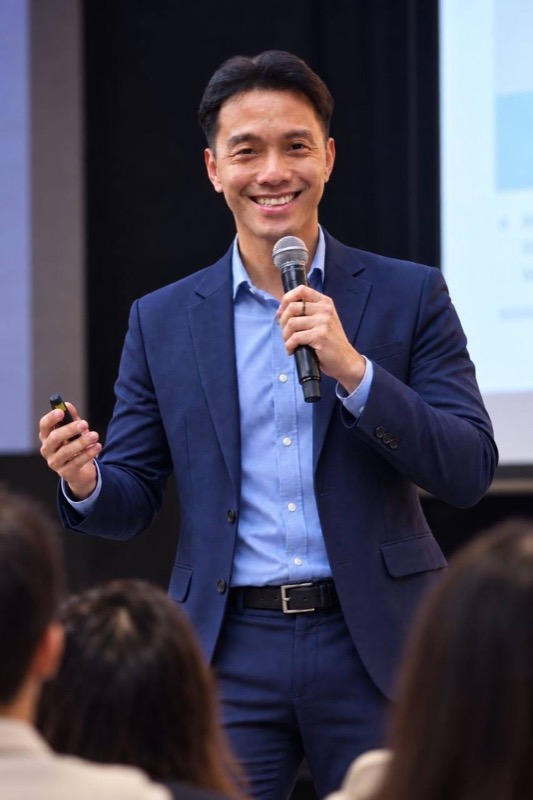
Sean Foo — founder

Sean Foo — founder

15 years in consulting, 18 in startups.

  • Stuart Wright Well ConsultancyDominated all offshore complex wells in Australia
  • AlgoMerchantSingapore's first AI robo-investing solution
  • Aurora Energy ResearchEurope's largest dedicated power analytics provider
  • AuthorSmall Island, Crowded Market and How a Small Business Gets Chosen — NLB Singapore ISBNs

AI accelerates the analysis. A person reviews, decides, and owns every recommendation — and answers when you call.

LinkedIn

Questions, answered honestly.

Who have you done this for?
We've done this work for real clients — across diverse industries and product categories in Singapore, including pets, F&B, salad, bubble tea, food packaging and many more. Our method is proven. What we keep building is client outcomes, published as we earn them, and the results ARE the proof.
Isn't this free at SME Centres or from ChatGPT?
Enterprise Singapore's SME Centres give free 1-to-1 advice to 25,000 enterprises a year — but it's anchored at zero. It helps you navigate grants and programs; it doesn't analyse your competitors and tell you the one position that wins. ChatGPT gives fluent, convincing answers with no evidence behind them — you can't tell a right strategy from a fatally wrong one unless you already know the answer. We do the competitive analysis against Singapore's real registries, and a person owns the recommendation.
Why not just use ChatGPT well?
A smart prompt can shape the answer, but it can't change what the model has never seen. It has never opened the Singapore registries for your industry, never checked your competitors' current pricing, never seen the new entrant that registered last month. And it was trained to appear convincing — a hallucinated competitor fact and a true one look identical coming out of it. No source to check, no person accountable if it's wrong.
What exactly do I get for S$500 as a starting point?
A full competitive analysis: your real competitors, where your customers are and how to reach them, every viable differentiator evaluated against YOUR market, the open slot and the traps, your positioning statement, and a 90-day roadmap. Delivered in 3–7 days — what big firms charge $500K and 6–8 weeks for.
How long does it take?
3–7 days from a 30-minute call. Big firms take 6–8 weeks. You're not waiting months for the answer — the market moves every quarter, and the answer is only useful while it's current.
Do you work with my industry?
We compile Singapore industry datasets from official registries: F&B (SFA's licensed registry, 20,000+ operators), childcare (ECDA's centre listing, 1,900+ centres), tuition, aesthetics, fitness, pet care. If your industry has official registry data, we can work with it. If it doesn't, we'll tell you honestly before you pay.
I'm just starting out. Is this for me?
Yes — this is exactly when positioning is cheapest. You haven't spent on packaging, a website, or ads yet. The analysis costs less than 7% of what being wrong costs in year one. Get it right before you spend, not after.
I've been in business for years. Is this for me?
Yes — the market moves every quarter. What worked three years ago may be owned by someone else now. The analysis tells you whether your position still holds — and the Watch keeps it current as the market moves.
What makes you qualified?
The method is the one behind Airbnb's "Belong Anywhere," Volvo's "safety," and Wang Lao Ji's "怕上火" — taught in every MBA program, with a foreword by Philip Kotler, author of the world's standard marketing textbook. We apply it systematically, with Singapore's data, and a person accountable for every recommendation.
Will you tell me things I don't want to hear?
Yes. If your current position is weak, we'll say so. If a competitor already owns the slot you wanted, we'll say so. The guarantee only works if we're honest — and the analysis is worthless if it flatters you.
What if it doesn't work for my business?
The guarantee: if we don't identify your best differentiator, you don't pay. And the analysis is scoped to your industry — we build it from Singapore's official public registries (food establishments licenced by SFA, childcare centres registered with ECDA, companies incorporated with ACRA, clinics licenced by MOH) so the answer is grounded in your market's data, not generic theory.
Why not use an AI tool that makes strategy decks?
It generates generic strategy documents with no Singapore context and no real market data. We use AI to run the analysis too — but a person reviews, decides, and owns the recommendation. The decision — which differentiator is right for YOU — is what we add.
Why not an agency?
Agencies sell full brand overhauls — S$20K–200K projects. We sell the analysis — what you need before you spend on a rebrand, at a fraction of the cost. If you need a rebrand after the analysis, you'll know exactly what it should say.
Can government grants help pay for this?
Not at this stage for government grants.
What happens after the 90-day roadmap?
The market keeps moving. The Differentiation Watch re-runs your competitive analysis every quarter — new entrants, new pricing, new positions — so your answer stays current. S$300–400/quarter, cancel anytime.
Can I see a sample first?
Yes — a full competitive analysis we produced, free. See the depth, the evidence standards, and the recommendation format before you spend anything. It's the same method we'd run on your market.
How is this different from hiring a marketing person?
They execute your marketing. We tell you which differentiator to commit to — and keep it current as the market moves. The marketing person works better once the position is decided.
Do I need to know strategy vocabulary?
No. We speak in pains: copycats, price wars, "how do I stand out." You bring the business; we bring the method.
Book a call